How I Found My First Game Projects as a Composer (and How You Can Too)
- Marika Speck
- Aug 22, 2025
- 3 min read

Updated: Aug 24, 2025
When I first got into the game industry as a 3d artist, the industry still felt… well, a bit like a small village. On my very first day at the games academy, the professor basically dropped the only advice that mattered:
“Doesn’t matter how good you are… if no one knows you, you’re not getting work. Go meet people.”
At first, I thought: Really? That’s it? That’s the big secret? But of course, he was right.
Networking - going to events, talking to people, hanging around at conventions - that’s what opened doors. And because the scene was smaller back then, you’d bump into people again and again. Some of those “random students” I met in the hallway 14 years ago? They’re now working at big studios. And the funny part is: they still remember who showed up and said hi back then.
So… how do you actually find game projects to work on today?
1. Start Small (and Yes, Sometimes for Free)
I know nobody loves to hear this, but here’s the truth: I started out working on hobby projects for free.
I would find people I knew working on portfolio games, or on some game dev forums, Twitter, Instagram, or Facebook who were working on passion projects, and I’d simply ask:
“Hey, can I make music for your game?”
Was it glamorous? No.
Did it pay bills? Definitely not.
But it taught me everything:
How to actually finish music, not just start it.
How to handle feedback (sometimes brutal, sometimes vague).
How to collaborate with real humans, not just my DAW.
How to work with reference tracks
How to polish a track until the dev likes it
2. Create Something That Can Find You
After a while, I realised I didn’t always want to chase projects. So I started writing music packs and uploading them to the Unreal Marketplace.
I did a bit of research and picked genres I liked, but with only a few products on the Unreal store.. and to be honest... most of them sounded terrible. So I had the goal to make it better, to learn and if that is working out, to get some passive income. Today Unreal is overrun with AI music, but that's even good for you. Dev´s now look for music that has higher quality, just label it as "human-made"
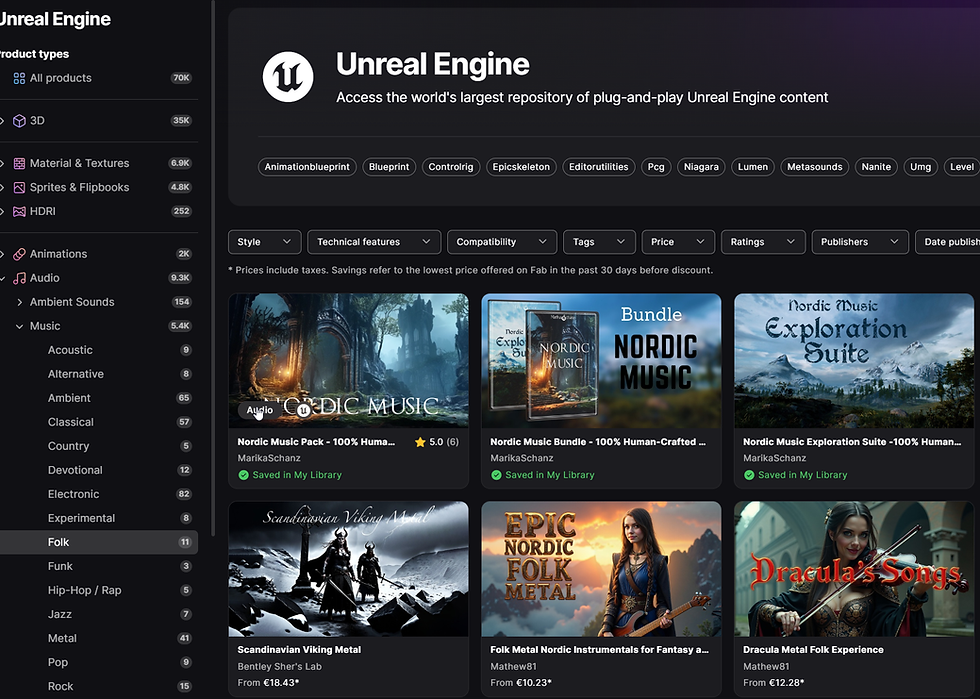
As an artist, I was able to create my own cover and marketing images (today, tools like Canva make that a breeze). I uploaded those packs to YouTube too, not expecting much.
But slowly, developers started reaching out.
YouTube gave me reach.
The Unreal Store promoted new products sometimes.
And suddenly I was being found by devs who wanted exactly the kind of music I was good at.
That’s a huge advantage: if someone contacts you because they already like your style, you don’t need to “convince” them. They know what they’ll get.
So find your style and be visible online!
3. Where Else Can You Look?
If I were starting out today, I’d also check:
Unity Asset Store – still plenty of room for unique, well-made music packs.
Itch.io & Game Jams – tons of small teams looking for composers. Great way to practice under real deadlines.
Discord communities – dev servers are full of opportunities if you show up and contribute.
LinkedIn – yes, really. Share your music, connect with devs, make yourself visible.
4. Build Your Online Presence
It’s not just about making music - it’s about being discoverable.
Some quick wins:
Upload tracks to YouTube with game-related keywords.
Share short clips on Twitter/X, Instagram, TikTok.
Post about your work-in-progress - devs love seeing process, not just polished reels.
Comment and interact on game dev posts (but don’t spam).
⚠️ And here’s the trap: a lot of people think they need to crank out content non-stop, every single day, to stay relevant. Honestly? That just buries you in the noise. Posting filler for the algorithm rarely helps. What works is quality,
a demo reel, a devlog-style video, or a pack that actually shows your style. One solid post will travel much further than ten “meh” ones.
So don’t burn yourself out trying to out-post the internet.
You DON´T have to become a TikTok entertainer. You’re a composer, not an influencer. Make fewer things, but make them good, that’s how you get noticed. Put effort into making something worth sharing, and let that represent you.
Final Thoughts
Finding your first projects as a game composer can feel impossible.
But if you:
network both online and offline,
start with small (even unpaid) projects to build experience,
release music packs that help you get found,
and keep your online presence clear and professional…
…you’ll start to see opportunities appear.
It takes patience, but I’m living proof: those early “tiny” steps built the foundation for everything I do today AND you can do that too.


The advice from Marika regarding the start of small projects and the value of networking is excellent. As an aspiring composer, I spend many hours in a home studio while I compose and refine various tracks. This habit frequently leads to serious tension in the back and neck. I find that using Mrjoint Relief Patches is a wonderful way to soothe those persistent muscle aches. It allows me to stay focused and productive in the DAW as I build a professional portfolio.
I love the tip about creating music packs for marketplaces to let developers find you—it’s such a smart, proactive strategy. I often take screenshots of successful listings or interesting game jam prompts to study later, but they often end up as HEIC files on my phone which are a pain to manage on my PC. I consistently use Heic to Jpg to quickly convert my research into a universal format. It makes keeping my inspiration folders organized and accessible so much easier!
Marika advice on starting with small hobby projects really hit home for me. It’s so true that the experience you gain from collaborating with real humans is worth more than any tutorial at the beginning. Ive been taking notes on her networking tips in Markdown to keep my thoughts organized as I reach out to indie devs. I found that using Markdown To Docx For Free is incredibly helpful when I need to turn my organized plans into a professional document to share with my mentors.
I love the idea of creating music packs to let developers find you! It shifts the dynamic from "convincing" to "attracting" clients. I’ve started drafting my own asset store strategies and tracklists in Markdown because it’s so clean. When I need to send a formatted copy of these tracklists to a potential partner or collaborator, I always rely on Markdown To Word For Free. It’s a great free resource that turns my structured notes into a standard file in seconds without any formatting headaches!
Marika’s advice on starting with small hobby projects really hit home for me. It’s so true that the experience you gain from collaborating with real humans is worth more than any tutorial at the beginning. I’ve been taking notes on her networking tips in Markdown to keep my thoughts organized as I reach out to indie devs. I found that using Markdown To Docx For Free is incredibly helpful when I need to turn my organized plans into a professional document to share with my mentors. It’s such a time-saver!